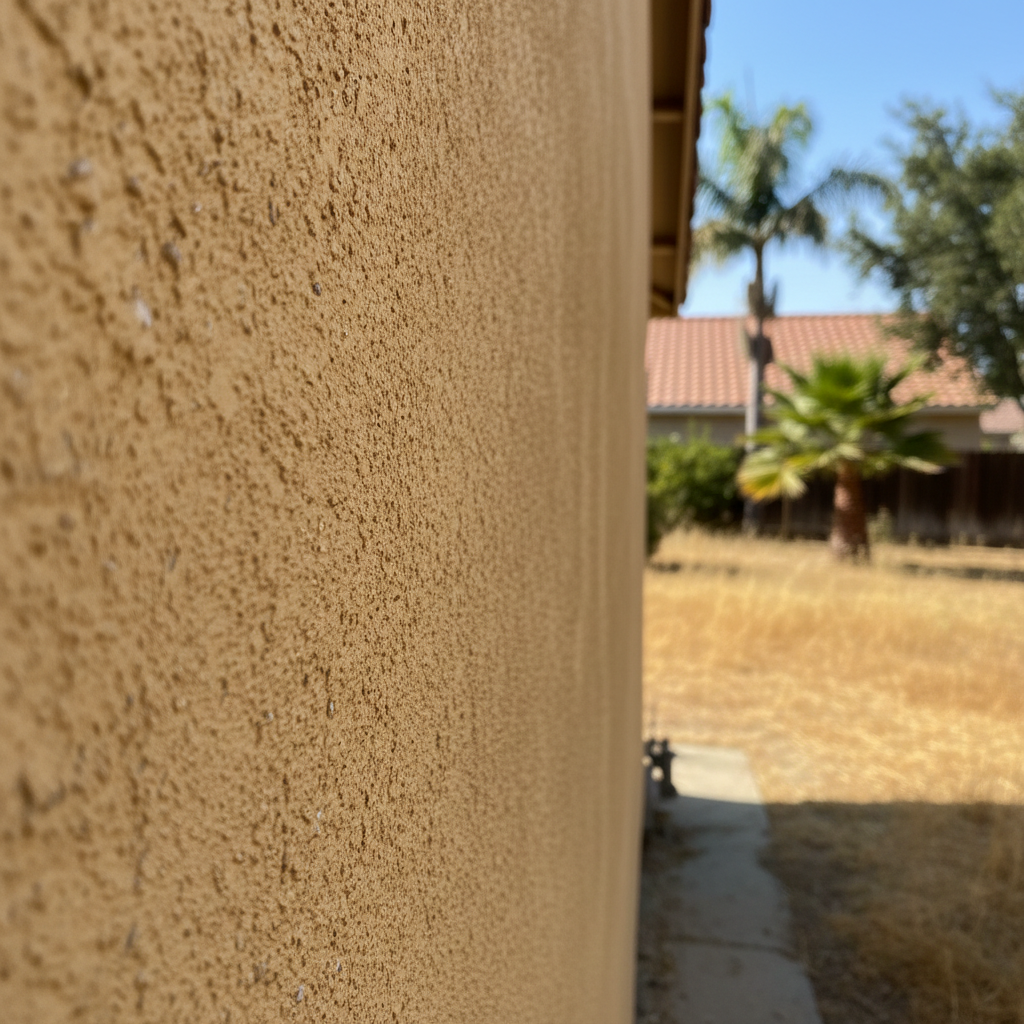
Your stucco's got a crack. So, what now? I get calls all the time from folks all over Sacramento — from those old beauties in Curtis Park to the newer builds out in Natomas — all wondering about their stucco. It’s a tough, durable material, sure, but it’s not invincible. Here are the questions I hear most often, along with my honest take on them.
What's making my stucco crack?
This is probably the most common question. Stucco can crack for a bunch of reasons, and it’s not always a sign of some huge problem. Sometimes, it’s just your house settling normally. Your foundation shifts a tiny bit over time, especially with our clay soils here in the Valley, which expand and contract with the seasons. When that happens, the stucco has to give somewhere. Those are usually just hairline cracks, often showing up around windows or doors. Then you’ve got impact damage – maybe a kid’s bike hit the wall, or a ladder slipped, that kind of thing. Water getting in is another big one; if water sneaks behind the stucco, it can cause swelling and cracking, especially if it freezes (not a huge issue here, but it does happen). And sometimes? It’s just poor installation or mixing from way back when the stucco first went on. Figuring out the cause is always the first step to fixing it right.
Can I just patch small cracks myself?
Absolutely, you can. If it’s a small, hairline crack — we’re talking less than 1/16th of an inch wide — you can often take care of it with some good quality elastomeric caulk made for stucco or masonry. Just clean out the crack, put the caulk in, and smooth it over. The tricky part is matching the texture and the color. That’s where most DIY jobs tend to fall short. See, stucco isn't just a flat surface; it’s got a specific texture. If you just smear caulk on it, it’ll stick out like a sore thumb, won't it? For anything bigger, or if you’re not confident about matching the finish, you’re better off giving someone like us at Top Line Stucco Sacramento a call. We've got the tools and the know-how to blend it right in.
When does a crack turn into a serious problem?
Small hairline cracks, as I mentioned, are usually just cosmetic. But if you start seeing cracks wider than a credit card, or if they’re growing quickly, that’s when you really need to pay attention. Horizontal cracks, especially long ones, or cracks that form a step pattern, can sometimes point to structural issues with your foundation. Also, if you notice water stains below a crack, or if the stucco feels soft or spongy around it, that means water is definitely getting in. And that, my friend, is a serious problem. Water behind stucco can lead to wood rot, mold, and even pest infestations. Don’t ignore those signs.
How do you match the existing stucco texture and color?
This is really the art of stucco repair, if you ask me. There are so many different textures out there – smooth, sand float, dash, Santa Barbara, and a whole bunch of others. To match the texture, we often use different trowel techniques and vary the aggregate sizes in our mix. For color, it’s a bit of science mixed with a bit of experience. If your stucco was integrally colored (meaning the color was mixed into the stucco itself), we’ll try to match that. But if it was painted, we’ll need to know the paint color and sheen. Over time, stucco fades from sun exposure and weather, so getting a *perfect* match to an old, faded wall can be tough. Sometimes, the best solution for a truly invisible repair on older stucco is to do the repair and then paint the entire wall, or even the whole house, to get a uniform look. It's something we always discuss with clients upfront.
What's the typical repair process?
First, we check out the damage to figure out what caused it and how bad it is. Then, we get the area ready. This usually means carefully taking out any loose or damaged stucco, cleaning out the cracks, and making sure the underlying surface is solid. If there’s water damage, we’ll fix any sheathing or framing issues first. Then we apply new stucco in layers, trying to mimic the original application. This might involve a scratch coat, a brown coat, and then the finish coat. Each layer needs time to cure, you know? Finally, we match the texture and color. It's not a quick process if you want it done right, especially with all those curing times. We’re not just slapping mud on a wall; it’s a multi-step process for a durable, good-looking repair.
How much does stucco repair cost?
That’s like asking how much a car costs – it really just depends. A small, cosmetic crack repair might run you a few hundred bucks. If you’ve got extensive water damage that means replacing big sections of stucco, repairing framing, and dealing with potential mold, you could be looking at several thousand. The size of the damaged area, how complex the texture match is, how easy it is to access the spot, and any underlying issues all play a role. The best way to get an accurate estimate? Have a pro come out and take a look. We’ll give you a clear breakdown so you know exactly what you’re paying for.
How long will the repair last?
If the repair is done correctly, and we've actually addressed the root cause of the damage, it should last just as long as the rest of your stucco. Stucco is incredibly durable; it’s built to last for decades. The key, though, is that "done correctly" part. Using the right materials, proper application techniques, and making sure the underlying issue (like water getting in) is fully resolved means your repair won’t just be some temporary patch. It’ll stand up to Sacramento’s hot summers and our wet winters just like the original material.